
Most lists of common mistakes new affiliate marketers make read like a set of rules to follow. The mistakes below are worth looking at differently, because each one drains your energy in a particular way, and energy is what runs out before month six. Skill rarely does.
So each section here names the mistake, explains how it wears you down, and offers a smaller habit to replace it. The last section combines those habits into a weekly routine that fits around a job or a family.
Why new affiliate marketers quit, and why it is rarely about skill
Writing a decent article, setting up a website and finding a keyword are all learnable, and most beginners get there. What ends the effort is usually emotional. The work feels like it is going nowhere, and a person who feels that way for several weeks in a row starts looking for a reason to stop.
Affiliate marketing makes this especially likely because the feedback is slow. You can publish for weeks before a page gets noticeable search traffic, and traffic comes before commissions. A beginner who has no way to see progress in that stretch will read silence as failure.
The six mistakes below all feed that problem. Each one either raises your expectations beyond what the timeline allows or spends your effort in a way you cannot keep up. Fixing them is mostly a matter of making the work lighter and the progress easier to see.
Mistake 1: Expecting income in the first few weeks
Many people arrive with a number in mind and a date to reach it. When the date passes with nothing to show, the number starts to feel like proof that the whole plan was a mistake. The expectation, not the results, does the damage.
A new site has to be crawled, indexed and trusted before it earns steady search traffic, and that generally takes longer than a few weeks. Visitors then have to find your pages, read them, and decide to click a link. Income sits at the end of that chain, so it shows up last.

The lighter habit: track inputs, not income
Replace the income goal for the first several months with a goal you control. Set a number of articles to publish each week and a number of sessions to work, then check those boxes. You can finish a week on target even when the earnings line is flat.
Keep a simple log with the date, what you worked on and what you published. After a couple of months, the log shows you a pile of finished work. That is far easier to keep going on than an empty earnings report.
Mistake 2: Switching niches or programs every time something looks shinier
A new idea always looks better than the project you are in the middle of, because the idea has no problems yet. Your current site has them: it is slow, unfinished and has no traffic. Switching resets the clock, and it also throws away the research and writing you already did.
Each switch costs more than the hours. It costs the small sense of momentum that comes from having built something, and without that sense, motivation has nothing to rest on. A person who changes direction three times in a few months has produced three starts and no finished site.

The lighter habit: keep a parking list
When a new niche or program catches your attention, write it in a notes file and go back to what you were doing. Do not research it, sign up or build anything. The idea is saved, and you give up nothing by waiting.
Then set a review date, perhaps once every three months. If an idea is still interesting on that date, it deserves a real look. Most of them will have lost their appeal by then, which tells you something useful about how much weight they deserved.
If you are still deciding on your first program or niche, settle that once, with clear criteria, so you are not reopening the question every week. The closing section links to a guide for that.
Mistake 3: Publishing without a plan or a keyword in mind
Writing whatever feels interesting that day is pleasant for a while. The trouble is that each article then starts with the question “what should I write about?”, and answering it from scratch takes real mental effort every time. Over weeks, that decision fatigue is a large part of why sessions start to feel heavy.
Articles written with no keyword in mind also tend to have no clear reader. Nobody is searching for the topic in those exact words, so the article has little chance of being found, and that adds to the feeling that the work is pointless.
The lighter habit: plan a batch of topics once
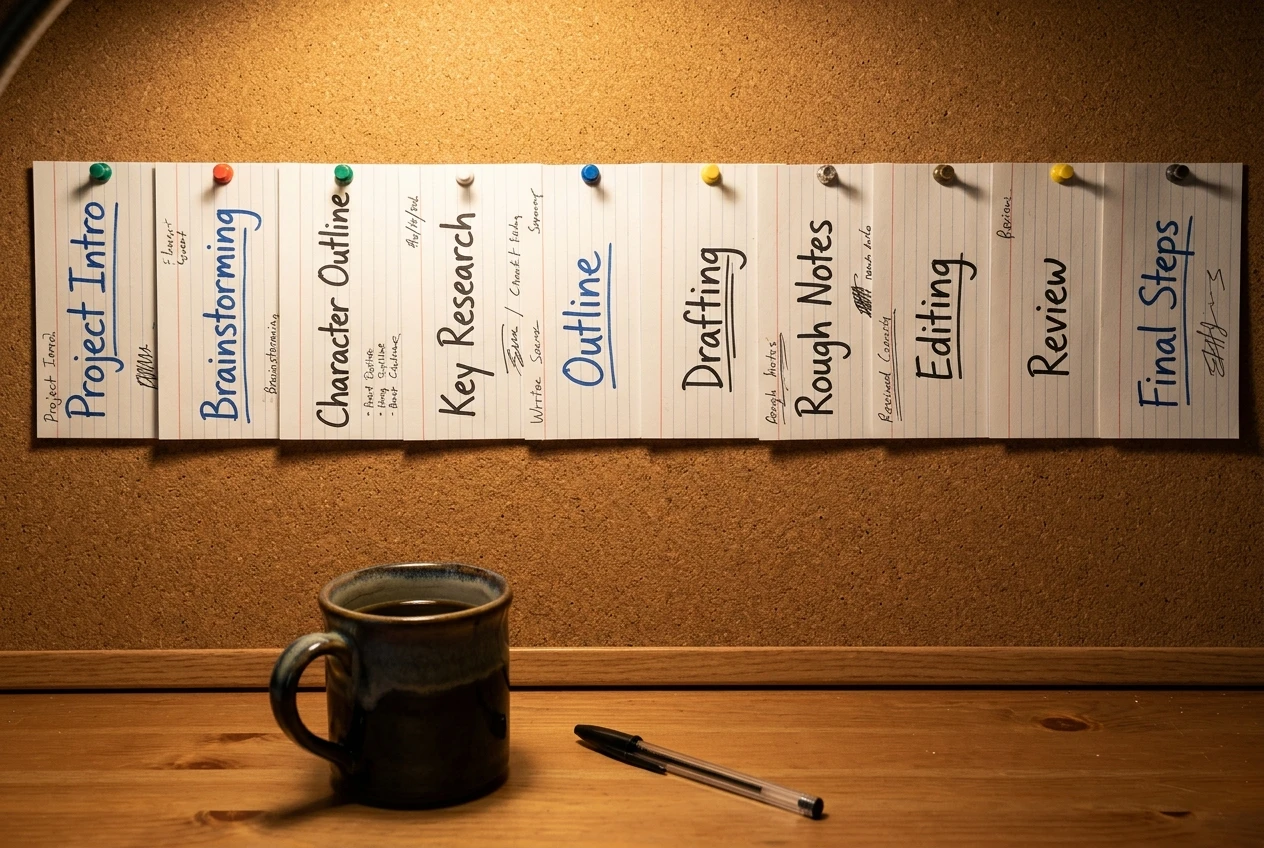
Set aside one session to build a list of ten or so article topics. For each one, note the search phrase a reader would type, the question that reader is trying to answer, and the type of page it will be, such as a how-to, a comparison or a review.
Then your writing sessions begin with a decision that is already made. You open the list, take the next item and start. A keyword tool or even the suggestions that appear as you type into a search box can help you find phrasing that real people use. Treat those as hints rather than guarantees, and adjust the list as you learn which pages get visits.
Mistake 4: Promoting products you have not researched or would not recommend
It is tempting to join a program because the commission looks attractive, then write about the product without really knowing it. The problem shows up when you sit down to write. You have nothing specific to say, so the article turns vague, and you can feel that it is weak while you write it.
That feeling is draining in its own right. Writing something you do not believe in is slower and more uncomfortable than writing something you do. Readers notice the vagueness too, and they are less likely to trust a recommendation that has no details behind it.
There is also a practical reason to care. Recommending a product that disappoints a reader costs you that reader’s trust, which is hard to rebuild, and an affiliate site depends on trust to convert anyone.
The lighter habit: use a short research checklist
Before you promote anything, answer a few questions in writing:
- Who is this product for, and who is it not for?
- What does it do well, and where does it fall short?
- What do people who have used it say, including the critical comments?
- Would you recommend it to a friend in that situation?
If you cannot answer these, hold off on writing the article. If the answers are mostly negative, pick another product. The checklist takes less time than writing a weak article, and it gives you concrete material to work with. Also remember to disclose your affiliate relationships clearly on your site, as readers and many jurisdictions expect.
Mistake 5: Working in bursts of all-nighters instead of a steady routine
A beginner with a day job often saves everything for one big push on the weekend or a few late nights. These bursts feel productive, but they are expensive. You end up tired, the next day’s work suffers, and the following session is easy to postpone because the last one felt so costly.
The burst pattern also creates gaps. If you skip a weekend, a full week passes with nothing done, and returning after a gap takes extra effort just to remember where you were. Many people never come back after the second gap.

The lighter habit: shorter sessions at fixed times
Choose sessions you can sustain even on a poor day, such as 45 to 90 minutes, and tie them to the same times each week. A fixed slot, like Tuesday and Thursday evenings or Saturday morning, means you spend no energy deciding when to work.
Make the minimum session small enough that you will do it even when you are tired. On a bad day, 20 minutes of editing an old article still counts. A routine survives because it is easy to restart, and a long streak is secondary to that.
Mistake 6: Doing everything alone instead of asking for feedback
Working alone makes it easy to misjudge your own progress. Without anyone to compare notes with, you cannot tell whether slow results are normal or a sign of a real problem, and you may spend weeks on something another person could fix in a minute. Isolation also removes encouragement, which matters more than most people expect during the quiet early months.
Many beginners hold back because they think their work is not ready to show. That is the wrong order. Early work is the most useful to share, because small corrections made early carry through everything you write afterward.
The lighter habit: ask one specific question each week
Pick one thing you want a second opinion on, such as a headline, an article outline or whether a product fits your readers. Ask a community of other affiliate marketers, a mentor or a friend who will be direct. A specific question gets a useful answer more often than “what do you think of my site?”
Over time you will also see how others handle the same slow stretches. That is often the most reassuring feedback you can get.
A realistic weekly rhythm you can keep up for a year
The habits above fit together into a single routine of about five hours a week. Adjust the numbers to your life, but keep the structure: each session has one job, so you never start by wondering what to do.
- Two writing sessions of 90 minutes each. Take the next topic from your planned list and write. Do not research new topics in these sessions.
- One research and planning session of 60 minutes. Add topics to the list, run the checklist on any product you plan to promote, and look at which keywords you want to target next.
- One review session of 30 minutes. Update your log with what you published and how long you worked. Look at your pages and note anything to improve, such as an unclear heading or a missing link. Check your parking list only on your quarterly review date.
- One feedback session of 30 minutes. Post your weekly question, read the replies, and answer someone else’s question if you can.
This schedule gives you two finished pieces of work a week, which is about eight a month. After six months that is a real body of content, and you reach that point because you kept showing up, with no sprint required.
Expect some weeks to go wrong. When you miss a session, do not make it up by doubling the next one. Return to the schedule as written. The point of the routine is that missing a day costs you almost nothing.
Review the routine every few months. If sessions feel too long, shorten them. If you are ahead of the plan and have energy to spare, add a third writing session. Changing the amount of work is fine, as long as you keep the schedule steady while you do it.
Pick one mistake from this list that you recognize in your own routine, then read how to choose your first affiliate program to fix the most common one.